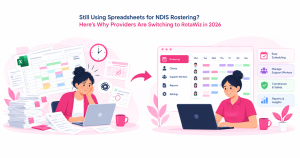
Carers are the backbone of the NDIS sector. Their dedication, professionalism, compassion, plus ongoing commitment allow participants to live full, meaningful lives. Yet the challenges they face daily are significant. Long shifts, unpredictable schedules, heavy workloads, combined with high administrative demands can quickly lead to stress or burnout. This reduces job satisfaction, increases turnover, ultimately affecting the quality of care delivered. For providers, understanding what carers truly need while implementing practical solutions is essential for workforce sustainability, compliance, participant satisfaction.
Understanding Carer Burnout in the NDIS Sector
Burnout among NDIS support workers is increasingly recognised as a major concern. According to the Australian Institute of Health and Welfare, staff turnover in community care settings is often driven by stress, workload pressure, plus inadequate support. When carers are overwhelmed, errors in documentation, miscommunication with participants, or delays in support delivery become more likely, creating a cycle of stress affecting both staff and the people they support.
Burnout is not only about long hours. It can also arise from inefficient rostering, unclear communication, limited access to participant information, together with an inability to manage shift changes effectively. For carers who move constantly between participant homes or community programs, outdated systems and manual processes make their work more stressful, reducing their ability to provide high-quality support.
The Daily Challenges Faced by Support Workers
Support workers encounter multiple pressures in their daily work, including:
- Unpredictable schedules: Last-minute shift changes or additional participant visits can disrupt routines or personal life.
- Administrative burden: Completing paper forms, incident reports, timesheets takes time away from direct support.
- Access to participant information: Without digital access, carers may not have the latest care plans or risk management details.
- Travel between locations: GPS tracking, shift verification, accurate travel times are difficult to manage without mobile tools.
- Communication delays: Changes in shifts or participant needs often arrive too late, causing confusion or stress.
These challenges contribute to fatigue, long-term stress, eventually burnout. Such pressures can drive carers away from the sector, creating continuity gaps for participants.
What Carers Really Need from Their Providers
To support carers effectively, providers must address both operational plus emotional needs. Key areas include:
- Flexible, predictable rostering: Carers value clear schedules that let them plan personal responsibilities alongside work.
- Mobile access to shifts plus participant information: Having essential details in one place reduces stress while helping carers respond effectively to participant needs.
- Efficient documentation processes: Tools that allow incident reporting, shift notes, timesheet submissions in real time reduce administrative pressure.
- Supportive management: Regular check-ins, open communication, responsive leadership help carers feel valued.
- Professional development opportunities: Access to training boosts confidence, skills, overall career satisfaction.
- Recognition with feedback: Acknowledging carers’ efforts builds morale plus loyalty.
Implementing these measures supports carers’ wellbeing while improving retention, compliance, participant outcomes.
How Modern Rostering and Digital Tools Can Help
One of the most effective ways to reduce burnout while improving balance for carers is through modern rostering systems plus digital workforce tools. These platforms automate repetitive tasks, give carers mobile access to schedules or participant information, streamline communication. Mobile-first systems provide real-time updates to shift changes, accurate GPS-based clocking, instant digital submission of shift notes or incident reports directly from the field.
For example, platforms like RotaWiz enable support workers to access shifts on mobile devices, log attendance with GPS verification, submit shift notes or incident reports instantly, view participant profiles or care plans on the go. By removing the need to return to the office for paperwork, RotaWiz reduces admin burden, ensures accurate documentation, allowing carers to focus on delivering quality support.
Supporting Work-Life Balance Through Better Rostering
Flexible, balanced rostering is essential to prevent burnout. Providers can support carers by:
- Allowing input on preferred shifts or availability
- Rotating challenging shifts fairly
- Minimising consecutive long shifts
- Providing sufficient notice for schedule changes
- Offering options to swap shifts easily through mobile apps
Modern digital tools like RotaWiz help providers manage these preferences efficiently, respecting carers’ availability while meeting operational requirements. When carers have predictable schedules with visibility into upcoming shifts, stress decreases, enabling better balance between personal commitments and work duties.
Real-Time Communication and Documentation
Carers need access to real-time information to perform their roles effectively. Inefficient communication increases stress, delays responses to participant needs, contributes to errors. Digital tools support communication and documentation by providing:
- Real-time shift updates
- Instant incident or progress reporting
- Access to support plans, risk assessments, participant notes
- Immediate alerts for changes in participant needs
This reduces uncertainty, strengthens accountability, allowing carers to work confidently without chasing paperwork or clarifying instructions.
Training, Professional Development, and Recognition
Beyond tools, carers require ongoing professional development along with recognition. Providers who invest in training strengthen workforce capability while showing carers they are valued. Structured training programs, online learning modules, mentorship opportunities help carers feel competent, supported, motivated. Recognition, whether formal awards, regular feedback, or team acknowledgment, promotes a positive workplace culture, encouraging long-term retention.
The Role of Providers in Preventing Burnout
Providers play the central role in preventing burnout by addressing systemic causes of stress. This includes:
- Implementing mobile-first rostering plus documentation systems that reduce admin load while improving communication
- Creating fair, predictable schedules that respect personal lives
- Establishing regular feedback loops between managers and staff
- Providing digital access to participant information for informed, person-centred care
- Supporting career development along with meaningful recognition
Providers focusing on these areas create an environment where carers can thrive, resulting in better service outcomes and stronger organisational stability.
Building a Balanced and Sustainable Workforce
Achieving balance between work and personal life requires more than short-term fixes. Providers should adopt a holistic approach combining technology, policy, culture, ongoing support. This includes:
- Using tools like RotaWiz to automate rostering, track attendance, manage shift notes or incident reporting, maintain digital participant records
- Reviewing workloads to avoid over-allocation of shifts while ensuring adequate rest periods
- Encouraging open communication to surface concerns early and address them proactively
- Offering opportunities for skill development plus career progression
- Recognising the contribution of carers consistently to strengthen morale and loyalty
Such an approach ensures carers feel supported, valued, capable of delivering consistent, high-quality support without compromising wellbeing.
End Note
Carers are essential to the success of NDIS providers. Yet they face daily challenges that, if unaddressed, lead to burnout, reduced retention, diminished quality of care. Providers that adopt a proactive approach, using mobile-first rostering, offering flexible schedules, providing professional development, fostering a supportive workplace culture, enable carers to move from burnout to balance. This strengthens workforce stability, boosts participant satisfaction, and enhances operational efficiency. Tools like RotaWiz offer practical digital solutions that reduce administrative pressure, streamline rostering or documentation, allowing carers to focus on supporting participants. The future of the NDIS workforce relies on providers recognising and meeting these needs to ensure a sustainable, healthy, engaged team.