Frontline supervisors in disability support services shoulder a responsibility that often goes unnoticed outside the office: ensuring that every incident, from minor participant mishaps to serious safety breaches, is correctly documented, investigated, and resolved. While carers respond in the moment, supervisors navigate a complex web of reporting obligations, follow-ups, compliance checks, and internal communication, all under the scrutiny of NDIS standards and organisational expectations.
The workload is invisible to most stakeholders, yet errors or delays can have serious consequences: incomplete documentation, compliance breaches, staff confusion, and, most importantly, compromised participant safety. Understanding the true burden of incident follow-ups requires examining the day-to-day challenges supervisors face and the tools that can alleviate some of these pressures without compromising accountability.
Incident Management: More Than Paperwork
When an incident occurs, frontline supervisors are immediately involved. They must:
- Confirm the facts with carers and participants.
- Ensure participant safety and ongoing support.
- Document the incident in accordance with NDIS standards.
- Follow up with staff for additional details or clarification.
- Review supporting documentation such as care plans, risk assessments, or medical notes.
- Escalate serious incidents management or external authorities.
- Archive reports and track completion for audit purposes.
Each step is time-sensitive. A delay in documentation or clarification can ripple across the roster, compliance reporting, and even funding claims. Supervisors often manage multiple incidents concurrently, while also covering staffing schedules, participant needs, and operational oversight.
Why Follow-Ups Are a Hidden Burden
On paper, incident follow-ups might seem straightforward: complete the report, forward to management, file it. In practice, they demand careful coordination:
- Multiple touchpoints: Supervisors frequently need input from carers, participants, families, allied health professionals, and administrative staff.
- Incomplete or delayed reporting: Carers may submit notes late, or documentation may be unclear, requiring repeated clarification.
- Compliance pressure: NDIS incident reporting standards require accurate, timely, and auditable records. Non-compliance carries reputational, legal, and funding risks.
- Emotional load: Incidents involving participant injury, behavioural challenges, or near misses impose a psychological burden, requiring supervisors to provide guidance and support while remaining impartial.
This workload often occurs alongside everyday operational duties. Rosters still need managing, staff availability tracked, and participant support delivered. The cumulative effect is stress, cognitive load, and the risk of errors, even among experienced supervisors.
Case in Point: A Day in the Life of a Frontline Supervisor
Imagine a supervisor starting their day with three new incident reports:
- A participant tripped during an outing, requiring minor first aid.
- A carer reported challenging behaviour requiring de-escalation.
- A medication error was flagged by a relief carer.
Each report comes with incomplete notes. Supervisors must call the reporting staff, clarify timelines, confirm actions taken, update participant care plans, and ensure that documentation aligns with NDIS reporting requirements. Meanwhile, they must adjust rosters to cover staff absences caused by the incidents and maintain communication with participants’ families.
Without integrated tools, every follow-up becomes a manual chain of verification, consuming hours of a supervisor’s day. The stress of ensuring accuracy while balancing operational demands is constant, often spilling into evenings.
Integration: Easing the Supervisory Load
Technology, when applied correctly, reduces some of these pressures without replacing the human responsibility critical to care. Integrated rostering and incident management tools bridge the gap between frontline reporting, staff oversight, and participant records.
For example, mobile-enabled rostering platforms like RotaWiz provide supervisors with:
- Immediate access to incident reports linked to specific shifts: Supervisors can view details submitted by carers in real-time, reducing the need for repeated follow-ups.
- Participant context embedded within each shift: Care plans, risk assessments, and prior incidents appear alongside the roster, enabling supervisors to evaluate situations quickly.
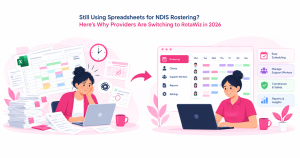
- Automated tracking of follow-ups: Supervisors can assign tasks, monitor completion, and receive alerts for pending items, eliminating the need for manual spreadsheets.
- Centralised communication: Staff receive notifications within the app, ensuring that clarifications or instructions are visible immediately, without relying on phone calls or emails.
These features do not remove the supervisor’s judgment or responsibility, they simply remove operational friction, allowing supervisors to focus on safety, compliance, and support.
Reducing Error Through Real-Time Documentation
One of the most significant risks in incident follow-ups is time lag. The longer it takes to confirm details, the more memory fades, notes become less accurate, and compliance risk rises. Mobile tools ensure that reports are captured in real-time, directly connected to the shift in which the incident occurred.
For frontline supervisors, this means:
- Fewer phone calls to chase incomplete reports.
- Faster verification of incident details.
- Immediate access to participant history and care instructions relevant to the incident.
- Easier escalation for critical events without delay.
In practice, this can reduce hours spent per incident from multiple phone calls and manual consolidation to minutes of review, freeing supervisors for more proactive management tasks.
Transparency and Accountability Without Added Workload
Integrated systems also improve transparency. When incident reports, follow-ups, and shift details are visible across the team:
- Supervisors can see which staff have completed follow-ups.
- Participants and families receive timely updates when appropriate.
- Management can audit processes in real-time without creating additional reporting tasks for supervisors.
By reducing duplicated effort, supervisors gain time to coach staff, provide feedback, and focus on high-priority incidents rather than administrative minutiae.
The Emotional Burden of Incident Follow-Ups
While software alleviates operational friction, it cannot remove the emotional weight. Supervisors often mediate between distressed participants, anxious carers, and procedural requirements. They manage accountability while maintaining empathy and professionalism.
Tools that streamline reporting, provide context, and centralise communication reduce cognitive load, giving supervisors bandwidth to focus on human aspects of care, which technology cannot replace.
Improving Compliance Through Structured Workflows
NDIS audit expectations are stringent. Every incident must be documented accurately, stored securely, and linked to participant outcomes. Misalignment between staff reports and supervisor follow-ups can lead to breaches.
Integrated incident tracking ensures:
- Documentation aligns with the correct participant and shift.
- Follow-ups are traceable, date-stamped, and assigned clearly.
- Supervisors can verify completion without chasing staff repeatedly.
Such structure reduces errors, builds confidence in compliance readiness, and supports quality care delivery.
The Unsung Value of Supervisors
The true burden of incident follow-ups is not always visible. It encompasses operational complexity, compliance pressure, emotional load, and the need to coordinate multiple parties simultaneously. Technology, integrated thoughtfully, eases friction without removing responsibility.
Platforms like RotaWiz illustrate how modern rostering and staff apps can embed incident management within daily workflows. Supervisors spend less time chasing reports, more time ensuring safety, mentoring staff, and maintaining service quality.
Ultimately, recognising this burden is crucial. Support for frontline supervisors, through process design, training, and smart technology, directly improves participant outcomes, staff satisfaction, and organisational compliance. When supervisors can focus on the human side of care rather than paperwork, everyone benefits.