Introduction: Your Roster Should Work as Hard as Your Team
Running an NDIS service in Australia involves much more than assigning support workers to shifts. Providers must coordinate participant schedules, manage staff availability, respond to last-minute changes, record service delivery and keep administrative tasks under control.
When these responsibilities are managed through spreadsheets, phone calls and disconnected applications, even a small change can create a chain of extra work. A cancelled shift might require several calls, an updated roster and a correction to a timesheet.
This is where the right rostering software can make a meaningful difference.
The best rostering software in Australia should do more than display a calendar. It should help providers coordinate shifts, communicate changes, monitor attendance and connect rostering with other essential business activities.
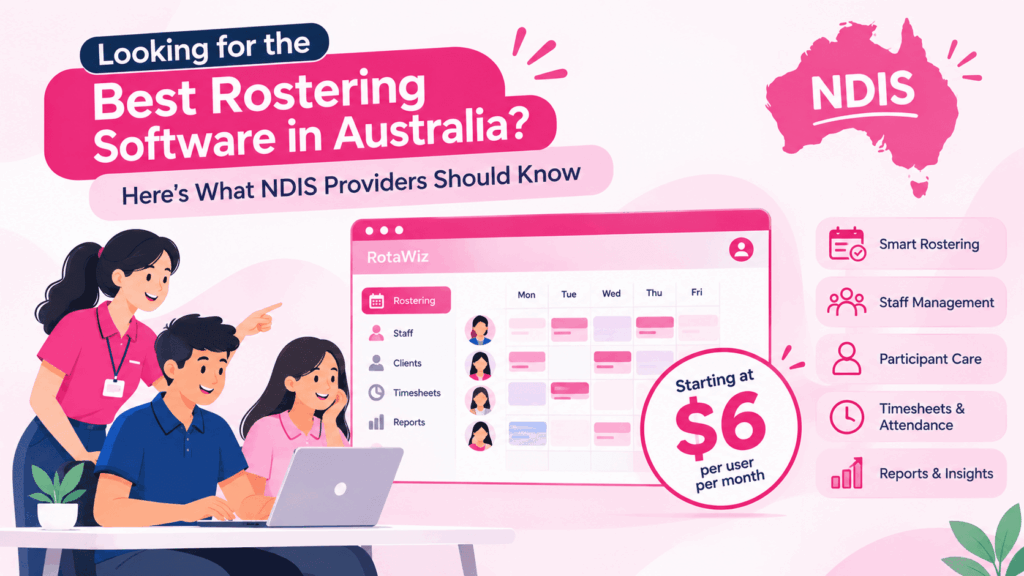
For Australian NDIS providers looking for a practical, affordable and scalable solution, RotaWiz brings rostering together with staff management, participant information, timesheets and other operational workflows.
What Is Rostering Software?
Rostering software is a digital platform that helps businesses plan work schedules, allocate shifts, manage availability and track working hours.
For NDIS providers, rostering has additional considerations. Support schedules need to reflect participant requirements, worker availability, service locations and the type of support being delivered.
A dedicated NDIS rostering platform can help teams coordinate these activities from a central system instead of relying on several separate tools.
Depending on the platform and subscription plan, useful capabilities may include:
- Drag-and-drop shift scheduling and recurring rosters.
- Staff availability and leave management.
- Shift notifications and schedule updates.
- Mobile access for administrators and support workers.
- Timesheets and attendance tracking.
- Participant profiles, shift notes and document management.
- Reporting and invoicing workflows.
The goal is simple: make daily operations easier to organise while giving managers better visibility over the work being delivered.
Why Australian NDIS Providers Need Better Rostering
1. Last-minute changes can disrupt the entire day
A support worker may become unavailable, a participant may need a different appointment time, or a shift may require reassignment.
Without a central scheduling system, managers may need to contact multiple people and manually update several records. This creates opportunities for confusion and missed communication.
Rostering software helps managers maintain a central schedule and communicate changes more consistently.
2. Manual administration takes time away from operations
Updating spreadsheets, checking attendance records and following up on shift notes can consume valuable administrative time.
Digital workflows can reduce repetitive data entry and make important information easier to locate. The actual time saved will depend on the provider’s existing processes and how the software is used.
3. Staff need clear and accessible schedules
Support workers need to know when and where they are expected to work, along with the information relevant to their assigned shifts.
Mobile access and shift notifications can make schedules easier to check and updates easier to communicate, particularly for teams working across multiple locations.
4. Rostering connects with timesheets and billing
A roster is only one part of the operational process. Providers also need to review completed shifts, confirm working hours and prepare accurate billing records.
When scheduling and timesheet workflows are connected, teams can reduce duplicate administration and identify discrepancies more easily.
What Makes the Best Rostering Software in Australia?
Not every scheduling platform is designed for disability support services. Before choosing a system, consider the following factors.
NDIS-focused scheduling
Look for software that supports recurring shifts, flexible scheduling and the operational needs of disability service providers. Supported Independent Living (SIL) rostering may also be important if your organisation provides these services.
Staff and participant management
A useful platform should make it easier to access staff details, participant information, relevant notes and supporting documents. Access permissions should also be appropriate for each user’s responsibilities.
Mobile applications
Administrators and support workers may not always be sitting at a desk. Mobile access can help workers check shifts and record relevant information while managers respond to operational changes.
Attendance and timesheets
Check whether the system supports clock-in and clock-out records, timesheet reviews and attendance verification. GPS-based features may be useful where appropriate, but providers should understand their operation and privacy implications.
Notifications and communication
Automated shift alerts and notifications can help staff stay informed about changes. Providers should confirm which notification methods are included in their chosen plan.
Reporting and integrations
Reporting tools can provide visibility into staff activity, attendance and operations. Integrations with accounting platforms may also reduce manual work when transferring financial information.
Transparent pricing and room to grow
A suitable system should fit the organisation’s current size and expected growth. Compare per-user costs, feature restrictions, add-ons, onboarding and support before making a decision.
Meet RotaWiz: Rostering and More in One Platform
RotaWiz is an Australian-focused software platform designed to support NDIS providers with rostering and related operational tasks.
Rather than treating scheduling as an isolated activity, RotaWiz brings together several workflows that providers commonly need to coordinate.
Plan shifts with greater visibility
RotaWiz offers rostering capabilities such as drag-and-drop scheduling, recurring shifts and shift-copying tools. These functions can help managers organise regular support schedules without rebuilding every roster from scratch.
Keep staff and participant information organised
Centralised profiles and records help teams access relevant information within their workflows. Depending on the selected plan, providers can also use tools for client management, case notes and document storage.
Manage attendance and timesheets
RotaWiz includes timesheet and attendance capabilities, including GPS-based clock-in and clock-out features. These tools can help providers review recorded hours and maintain clearer operational records.
Give teams mobile access
Mobile applications help administrators and support workers access relevant scheduling and operational information away from the office.
Connect rostering with wider operations
RotaWiz offers additional capabilities covering invoicing, reporting, SIL-related workflows and accounting integrations. Available functionality varies by subscription plan, making it important to review the current feature comparison before signing up.
Is RotaWiz Suitable for Small NDIS Providers?
Small providers often need a reliable system but may not have the budget or administrative resources of a large organisation.
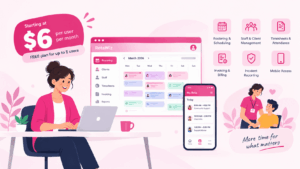
RotaWiz offers a Startup plan free forever for up to five users. Its published pricing also lists an Essential plan starting at A$6 per user per month.
This gives smaller organisations an opportunity to begin with a free option and consider a paid plan as their requirements develop.
For providers comparing software, the important question is not simply which platform has the lowest advertised price. It is whether the available features, support and workflows suit the organisation’s day-to-day operations.
You can review the available plans on the RotaWiz pricing page.
How to Choose the Right Rostering Platform
Before committing to a system, take these practical steps:
- Map your current process. Identify where scheduling, attendance, timesheets and communication create the most work.
- List essential features. Separate must-have capabilities from features you may need later.
- Check the real cost. Compare per-user pricing, add-ons and plan limitations.
- Test everyday workflows. Create a recurring shift, update a roster and review a timesheet.
- Review privacy and access controls. Check how participant information is protected and who can access it.
- Ask about support. Confirm how onboarding, troubleshooting and product guidance are provided.
A platform should simplify your team’s work rather than introduce another complicated process.
Frequently Asked Questions
Q.1 What is the best rostering software for NDIS providers in Australia?
The best option depends on team size, scheduling requirements, participant workflows, budget and integrations. Providers should compare available features and test their most common tasks before choosing a platform. RotaWiz is one option designed for NDIS rostering and related operations.
Q.2 How much does NDIS rostering software cost?
Pricing varies by provider and subscription. RotaWiz currently lists a free Startup plan for up to five users and an Essential plan starting at A$6 per user per month. Check the official pricing page for current inclusions.
Q.3 Can rostering software help reduce administrative work?
It can help by centralising schedules, reducing repetitive data entry and connecting rostering with timesheets and other workflows. Results depend on the organisation’s processes, implementation and staff adoption.
Q.4 Is mobile rostering software useful for support workers?
Yes. Mobile access can help workers check assigned shifts, receive updates and use supported features such as clock-in and shift notes without returning to an office computer.
Q.5 Is free rostering software suitable for a small NDIS business?
It can be a practical starting point when the included user limit and features meet the organisation’s needs. Review data access, support, reporting and upgrade costs before relying on a free plan long term.
Final Thoughts: Choose Software That Supports Better Workflows
The right rostering software should help Australian NDIS providers coordinate people, schedules and records with less friction. It should be practical for the team today while supporting the organisation as its requirements evolve.
From recurring shifts and mobile access to attendance tracking and connected operational workflows, RotaWiz offers tools that providers can explore when evaluating their next rostering platform.
Ready to simplify your rostering? Visit RotaWiz to explore its features and find a plan that fits your team.