The disability support sector in Australia is in the middle of an undeniable shift. With the NDIS growing rapidly and demand for support workers rising, providers aren’t just competing for clients, they’re competing for carers too. For many organisations, attracting and keeping skilled casual and part-time workers is the difference between delivering reliable support and struggling to cover shifts.
At the heart of this challenge sits rostering. Rosters aren’t just timetables, they’re a window into how much a provider values its carers. If a worker feels ignored, overbooked, or constantly shuffled without notice, their loyalty drops. If they feel heard, respected, and supported, they’re far more likely to stay. That’s where flexible rostering comes in.
Why flexibility is no longer optional
Across Australia, casual and part-time carers are asking for the same thing: more say in when and how they work. Flexibility isn’t just about lifestyle, it’s about survival. Many carers juggle multiple jobs, family commitments, or study alongside their shifts. Others are balancing their own well-being and can’t take on irregular rosters without warning.
Research into the disability workforce shows that work-life balance is one of the top reasons support workers stay in, or leave, the sector. In a competitive market, rigid rosters are no longer enough. Providers who offer flexibility not only attract more applicants but also hold on to their existing workforce for longer.
Flexibility shows up in small but meaningful ways. Carers want to pick up extra hours when it suits them, decline shifts when they’re stretched, and swap shifts without jumping through hoops. The providers who build this into their rostering approach are the ones building trust, respect, and long-term commitment.
The cost of ignoring flexibility
When flexibility is missing, it doesn’t take long for cracks to appear. Carers who feel they have no control over their schedules are more likely to burn out or quit. Shift cancellations increase, morale drops, and suddenly, clients are left without reliable support.
On the provider side, constant turnover means more recruitment costs, more time spent training, and less continuity of care. Participants notice this too. They rely on familiar, consistent support workers, and when rosters change every other week, the quality of care suffers.
It’s not an exaggeration to say that inflexible rostering directly affects provider reputation. In today’s environment, carers talk, and a provider known for unfair or unmanageable rosters will struggle to recruit and retain staff, no matter how strong their client base is.
What flexible rostering really looks like
True flexible rostering isn’t about handing all control to carers, nor is it about managers scrambling to fill gaps at the last minute. It’s about balance.
- Carers can set their availability in advance.
- Managers can see the whole workforce picture clearly before rostering.
- Shifts are allocated fairly, with attention to both client needs and worker wellbeing.
- Changes or cancellations are handled smoothly, without penalising carers or leaving clients unsupported.
This kind of balance respects both sides. Carers feel valued and empowered, while providers maintain service quality and compliance. In practice, it’s this balance that makes casual and part-time workers choose one provider over another.
Where technology genuinely helps (without taking over)
You don’t need fancy tools for everything, but purpose-built rostering platforms make flexible scheduling realistic, especially when you’re managing casual and part-time teams.
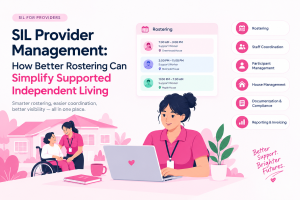
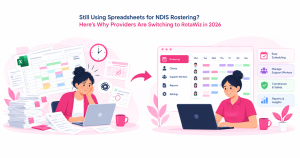
For example, RotaWiz is designed specifically for NDIS providers. It gives carers access to a dedicated worker mobile app, where they can view upcoming shifts, participant details, and notes, reducing confusion and ensuring smoother handovers. On the other side, managers can use the admin mobile app to create and adjust rosters instantly, approve changes, and handle last-minute updates without being tied to a desk.
The platform also has features like calendar-based scheduling, real-time shift updates, and participant continuity management to help avoid double-bookings or unfair allocations.
For smaller providers or startups, RotaWiz even offers a free-forever plan (up to 5 users), meaning you can start building fair, flexible rosters without adding overhead costs.
In short, it’s not about replacing human judgment, but giving you the tools to respect availability, ensure fairness, and stay compliant, at scale.
Why carers notice (and talk about) flexibility
Carers don’t just notice when flexibility is missing; they talk about it. Word-of-mouth within the disability sector is powerful. If a provider is known for clunky rosters, late notifications, or unfair shift allocations, that reputation spreads fast. On the flip side, when carers feel trusted and supported through fair scheduling, they become ambassadors for the provider.
Think about it: a carer who can easily check their shifts on their phone, swap when needed, and avoid clashes with family commitments is far more likely to stick around. They’re also more likely to recommend the organisation to friends or colleagues looking for casual work. In a market where demand for carers is outstripping supply, this positive reputation becomes a serious competitive edge.
Attracting the next generation of carers
Younger workers entering the disability support workforce place a huge premium on flexibility. For them, rigid nine-to-five schedules are outdated. They expect rostering systems that mirror the flexibility they see in other industries, like hospitality or retail, where swapping shifts, setting availability, and using mobile apps are the norm.
If providers want to attract this next generation of carers, they need to modernise rostering. It’s no longer just about filling shifts; it’s about offering a work culture that adapts to workers’ lives. Those who fail to do this risk losing talent to more flexible, tech-enabled competitors.
The business case for flexible rostering
Flexibility isn’t just a feel-good concept; it’s financially smart. Providers that embrace flexible rostering typically see:
- Lower turnover, meaning reduced recruitment and training costs.
- Fewer shift gaps, because carers are more engaged and reliable.
- Better compliance, with fewer payroll or scheduling errors.
- Improved client satisfaction, thanks to greater continuity of care.
In other words, the investment in flexible rostering pays for itself in stronger workforce stability and better service delivery.
Final thoughts: flexibility as the ultimate advantage
In today’s competitive care market, flexibility is no longer a perk; it’s an expectation. Carers are choosing providers who give them control, respect their time, and make their working lives smoother. Casual and part-time workers, in particular, will gravitate toward organisations that recognise their needs and adapt accordingly.
The good news is that providers don’t have to reinvent the wheel. By embracing flexible rostering, backed by the right tools, respectful practices, and genuine commitment to worker wellbeing, they can attract the best carers, reduce turnover, and deliver more consistent care to participants.
And when carers feel valued, supported, and respected, everyone wins: the worker, the provider, and most importantly, the participants who rely on stable, reliable care.