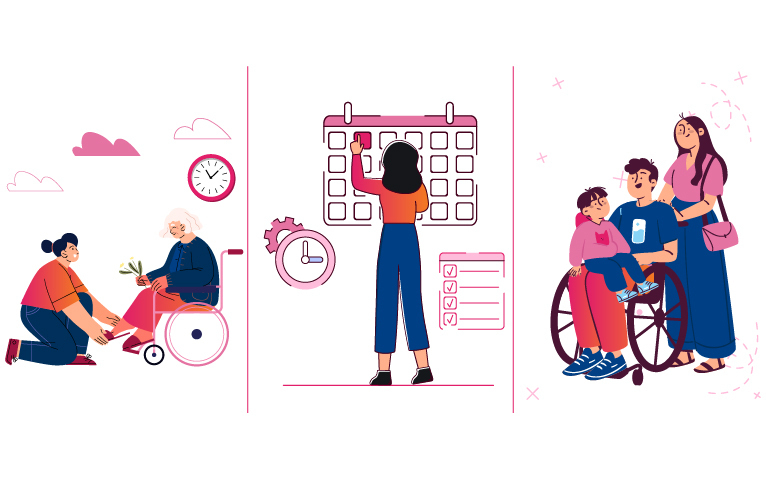
The National Disability Insurance Scheme (NDIS) is often described as one of Australia’s most significant social reforms. It has transformed the way disability supports are funded and delivered, shifting choice and control towards participants and their families. But beneath the policy goals and promises of empowerment lies a more complex question: who really holds power in the NDIS, carers, providers, or families?
Power in disability care isn’t always obvious. It moves between formal authority (the NDIA and providers), lived experience (participants and families), and the invisible backbone of care (carers and support workers). Understanding these dynamics is critical for building a system that is fair, sustainable, and truly participant-centred.
The Shifting Landscape of Power in Disability Care
Before the NDIS, funding was often block-allocated to providers, leaving participants with limited choice. Providers held significant control over who received services and how. The NDIS flipped this model, introducing individualised funding packages that were meant to put power back into the hands of people with disability.
On paper, participants and families should now be the most powerful voices in the sector. Yet in practice, power is more fragmented. Factors like workforce shortages, inconsistent provider quality, and the administrative complexity of the scheme mean that families often still feel powerless.
What’s more, the NDIS has grown into a $44 billion program supporting over 600,000 Australians, making it both a life-changing safety net and a highly bureaucratic system. In such a large ecosystem, power doesn’t sit neatly in one place.
The Role of Carers: The Invisible Powerhouse
Carers, both unpaid family members and paid support workers, are the foundation of disability care. According to Carers Australia, unpaid carers contribute an estimated $77.9 billion annually in replacement value to the economy. This is a staggering figure, yet their voices are often under-recognised in NDIS policy and planning.
- Unpaid carers: Parents, siblings, and partners frequently take on 24/7 roles in managing appointments, coordinating supports, and advocating for funding. Their lived experience shapes how participants actually access the NDIS.
- Support workers: The frontline workforce translates rostering schedules into real human care. They bring professional skills but also emotional labour, often working under conditions of low pay and insecure contracts.
The sector also faces a workforce crisis: demand for disability support workers is rising far faster than supply. The Productivity Commission has warned that Australia will need tens of thousands of additional workers by 2030 to meet participant needs. This shortage places carers under even greater strain, indirectly shifting power back to providers who can control scarce resources.
Despite their indispensable role, carers rarely hold formal power. They must navigate providers, the NDIA, and funding rules, which can leave them feeling sidelined. Yet, without them, the system simply would not function.
Providers: Holding Operational Control
Providers, from small community organisations to large national companies, hold considerable operational power. They manage staff, set service standards, and directly influence the quality of support a participant receives.
- Smaller providers may offer more personalised care but struggle with workforce shortages and administrative burdens.
- Larger providers bring scale, resources, and sometimes more stability, but can feel impersonal or inflexible to families.
Providers also face scrutiny around pricing, compliance, and service delivery. While they technically work for the participant, in practice many families feel their choice is limited by waitlists, location, and available staff.
The introduction of stricter NDIA compliance and fraud-prevention measures has further increased provider responsibility. While this protects participants, it also means providers must dedicate more resources to administration, sometimes at the expense of frontline service quality.
This creates a paradox: the NDIS is designed to give participants control, but providers still wield significant influence because they decide how services are delivered day-to-day.
Families: Advocates and Decision-Makers
Families, especially parents of children with disability, often act as both advocates and managers. They juggle navigating the NDIA, negotiating with providers, and ensuring their loved one’s funding is used effectively.
Power here comes not from official authority but from advocacy, persistence, and knowledge of the system. Families who understand the NDIS well, or who can afford professional support coordinators, are often more successful at securing better plans and services.
This raises equity concerns. Families with fewer resources may find themselves disadvantaged, highlighting a power imbalance that contradicts the principle of universal access. Research also shows that families often experience “administrative fatigue”, worn down by constant plan reviews, paperwork, and the emotional toll of advocacy.
Yet when families are empowered, the outcomes can be transformative. They are uniquely positioned to ensure participants’ voices are heard, especially for children or people with complex communication needs.
The NDIA and Government: The Ultimate Gatekeepers
While the focus here is on carers, providers, and families, it is impossible to ignore the NDIA itself. The Agency sets funding rules, pricing caps, and compliance requirements. It also has the power to approve, deny, or cut plans.
Recent years have seen stronger compliance activity around fraud and misuse of funds, which is necessary to protect participants but adds more administrative burden. For families and providers alike, the NDIA can feel like the ultimate gatekeeper, holding the power to make or break care arrangements.
Upcoming reforms, including talks of independent assessments and new fraud task forces, may again shift the power balance. Many in the sector fear that if reforms prioritise cost-cutting over lived experience, families and carers will lose even more influence.
Technology: Shifting Transparency and Balance
One emerging factor that reshapes the power balance is technology. Digital tools are helping participants, families, and providers to collaborate more effectively, increasing transparency and reducing conflict.
For example, RotaWiz, a rostering and workforce management platform built for disability and aged care, provides families and carers with more visibility and control:
- Smart rostering ensures shifts are fairly distributed and aligned with participant preferences.
- Mobile apps for workers and Admins provide real-time updates on shifts, changes, and incidents.
- Incident reporting features allow issues to be logged and tracked transparently, reducing disputes.
- NDIS-compliant invoicing ensures financial transparency, helping providers trust where their funding is going.
When tech is used well, it reduces the power imbalance between providers and families, building trust through data and accountability. Instead of carers feeling left out of the loop, or families unsure about service quality, everyone sees the same information in real time.
Case Study: The Power of a Roster
Consider the impact of a simple roster.
- A carer depends on it to plan their work and life.
- A participant relies on it for consistency and stability.
- A family uses it to know when support is coming, ensuring safety and peace of mind.
- A provider uses it to allocate scarce resources and remain compliant with the NDIS.
One poorly managed roster can trigger a chain reaction of stress, missed care, and financial loss. Conversely, a well-managed roster, supported by transparent tools like RotaWiz, can empower all parties, aligning their needs and responsibilities.
This small example illustrates how power isn’t just about policy, it’s about the systems and tools that connect people on the ground.
Power Dynamics in Practice
To understand how power plays out, consider three common scenarios:
- A last-minute shift cancellation
- Carer loses income
- Participant misses essential support
- Family must step in
- Provider risks breaching compliance
Here, the provider holds immediate control, but the fallout impacts everyone.
- An NDIS plan review cuts funding
- Families scramble to re-negotiate services
- Providers must downscale support
- Carers lose hours and income
The NDIA’s decision overshadows all other players.
- Introduction of smart rostering software
- Carers get predictable, fair schedules
- Families gain visibility and peace of mind
- Providers reduce admin errors and compliance risks
Here, technology redistributes power more evenly, creating a win-win environment.
Looking Ahead: The Future of Power in the NDIS
As the NDIS matures, the question of power will remain central. Several trends are likely to shape the future:
- Greater emphasis on co-design: Participants and families are demanding a stronger role in shaping services and policies.
- Workforce reforms: Improving pay, training, and conditions for carers could rebalance power by recognising their essential role.
- Tech-driven transparency: Tools like RotaWiz will become the norm, not the exception, giving all parties more visibility.
- Policy reforms: With rising costs, governments will likely tighten controls, making advocacy and family voices more important than ever.
The balance of power may never be perfect, but acknowledging its complexity is the first step to making the system fairer.
Final Thoughts
Power in the NDIS doesn’t belong solely to carers, providers, or families. It flows between them, shaped by policies, systems, and relationships. By recognising this, and by using smarter tools to create transparency and collaboration, we can build a disability care ecosystem where no one feels powerless and where participants are truly at the centre of every decision.