Documentation has always been at the core of disability services, but it has rarely been efficient, intuitive, or user-friendly. In NDIS disability care, support workers are expected to deliver high-quality, person-centred support while also maintaining accurate and compliant records. The problem? Documentation often pulls attention away from the very people it’s meant to support.
This is where a subtle but powerful shift is happening.
Speech-to-Text technology is quietly reshaping how documentation is captured, improving quality without disrupting care delivery. When embedded into modern disability support software and NDIS documentation software, it changes not just how notes are written but how care is experienced, delivered, and managed.
The Growing Documentation Pressure in NDIS Disability Care
Documentation in NDIS disability care has become more complex over time. Providers must meet strict compliance standards, ensure transparency, and maintain detailed records that support funding, audits, and care planning. Yet the tools used to capture this information often lag behind real-world workflows.
Support workers frequently complete notes at the end of shifts, relying on memory rather than real-time observation. This leads to generic entries, missed details, and increased administrative stress. For providers, this creates inconsistency across records and raises compliance risks.
Modern disability support software like RotaWiz addresses this gap not by adding more steps, but by simplifying how documentation is captured in the first place.
The Hidden Cost of Poor Documentation in Disability Support Services
Poor documentation doesn’t always show up immediately, but over time, it creates serious operational, financial, and compliance challenges for providers in NDIS disability care. Missed details, delayed notes, and inconsistent records quietly erode efficiency and increase risk.
Where Poor Documentation Hurts the Most:
When Disability support software relies heavily on manual processes, the cost often shows up in places providers least expect:
- Compliance risks increase when records lack detail or are completed long after shifts
- Revenue leakage occurs due to incomplete or inaccurate documentation tied to services delivered
- Care continuity suffers, as teams struggle to access reliable, up-to-date client information
- Support worker burnout increases, driven by excessive after-hours admin work
Over time, these issues compound, leading to operational inefficiencies and reduced service quality. This is why modern NDIS documentation software is shifting toward real-time, worker-friendly solutions like Speech-to-Text.
Why Documentation Quality Is Becoming a Competitive Advantage in NDIS Disability Care?
Providers who maintain accurate, timely, and consistent records are better positioned to scale, pass audits, and build trust with participants and families. As expectations increase, documentation quality directly reflects the professionalism of a provider’s operations.
How High-Quality Documentation Sets Providers Apart?
Modern Disability support software enables providers to move beyond basic record-keeping and toward intelligent care management. When documentation is clear and consistent, it strengthens every layer of service delivery by:
- Improving audit readiness and transparency, making compliance reviews smoother and less stressful
- Building trust with participants and families through clear, well-documented care histories
- Supporting better internal decision-making, helping teams respond faster to changing client needs
- Enabling scalability, allowing providers to grow without increasing administrative workload
High-performing organisations increasingly rely on advanced NDIS documentation software to standardise records across teams and shifts. Tools like Speech-to-Text enhance this further by ensuring documentation is captured accurately and in real time. When combined with integrated rostering, documentation quality becomes a measurable operational advantage.
What Speech-to-Text Really Means for Disability Support Software?
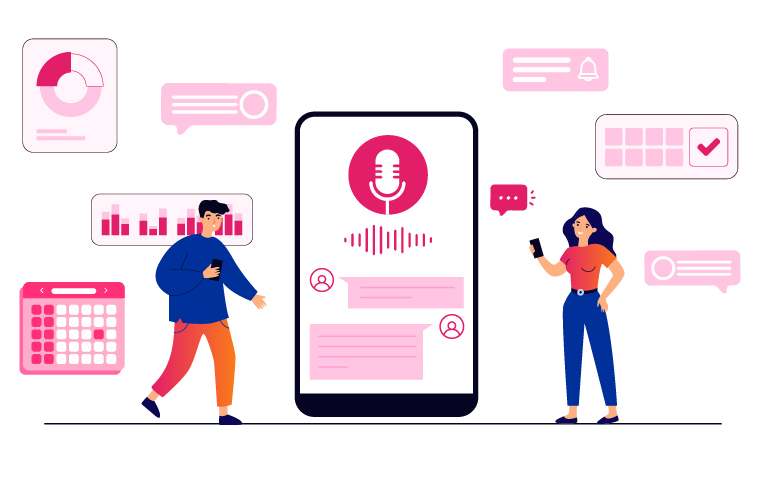
Speech-to-Text allows spoken words to be instantly converted into written documentation. In practical terms, this enables support workers to describe activities, observations, and outcomes naturally.
Within NDIS documentation software, this means documentation becomes part of the care process rather than a task postponed. Spoken notes tend to be richer, more contextual, and more reflective of real interactions, dramatically improving the overall quality of records.
How Speech-to-Text Improves Documentation Quality?
In NDIS disability care, documentation quality directly affects compliance, funding, and continuity of support. Traditional note-taking methods often rely on manual processes, delayed entries, and rushed summaries, leading to inconsistencies across records. Speech-to-Text changes this by enabling real-time, natural documentation that captures care as it happens. When this capability is embedded within disability support software like RotaWiz, it doesn’t just improve notes; it elevates the entire documentation workflow within NDIS documentation software. How?
- Captures details in real time, reducing reliance on memory and ensuring observations are recorded while context is fresh
- Produces more accurate and descriptive client records, improving clarity for coordinators, auditors, and care teams
- Minimises manual typing and documentation fatigue, allowing support workers to focus on people, not screens
- Reduces errors and incomplete notes, strengthening compliance across NDIS Disability Care requirements
- Improves consistency across NDIS documentation software, especially when documentation is directly linked to rosters and shifts
These improvements directly support better care planning, smoother audits, and stronger continuity of support. These are the key reasons why providers are moving toward integrated platforms like RotaWiz, where documentation quality and rostering work together instead of in silos.
Why Support Workers Benefit the Most?
Speech-to-Text has a direct impact on the daily experience of support workers. Instead of dividing attention between clients and devices, workers can remain present and engaged while still meeting documentation requirements.
This shift reduces cognitive load and post-shift administrative work, allowing documentation to happen naturally during or immediately after interactions.
For organisations using advanced disability support software, this also leads to higher-quality data across teams without increasing workload.
Better Documentation Leads to Better Care Outcomes
High-quality documentation directly influences care quality. When records are detailed, timely, and accurate, teams can identify changes in client needs more quickly and respond more effectively.
Speech-to-Text enables richer insights by capturing tone, context, and nuance that are often lost in rushed typed notes. Within NDIS documentation software, these insights support better decision-making, improved collaboration, and stronger client relationships.
Why Speech-to-Text Is Essential in NDIS Rostering Software?
Documentation does not exist in isolation. It is closely tied to shifts, support workers, locations, and service delivery. This is why Speech-to-Text delivers the most value when integrated into NDIS rostering software, not treated as a standalone feature.
When documentation is directly linked to scheduled shifts:
- Records are easier to verify
- Compliance checks become simpler
- Billing and reporting are more accurate
Integrated Disability support software ensures that what was scheduled, delivered, and documented all align seamlessly.
How RotaWiz Elevates Speech-to-Text Within NDIS Workflows?
RotaWiz is designed specifically to enhance the NDIS disability care. It understands that support work happens in dynamic and people-focused environments.
By supporting modern documentation approaches like Speech-to-Text within a robust rostering framework, RotaWiz helps providers:
- Reduce administrative burden
- Improve documentation accuracy
- Maintain compliance effortlessly
Rather than forcing workers to adapt to software, RotaWiz adapts to how care is actually delivered, making it a truly effective Disability support software solution.
Key Benefits of Speech-to-Text in RotaWiz
- Faster, more accurate documentation
- Improved client engagement during support delivery
- Reduced administrative workload for staff
- Stronger compliance within NDIS documentation software
- Better alignment between rostering and care records
Why This Matters for NDIS Providers In The Current Situation?
The expectations placed on providers are increasing. Transparency, accountability, and quality outcomes are no longer optional; they are foundational to success in NDIS Disability Care.
Providers relying on outdated documentation methods risk falling behind. Speech-to-Text represents a practical, scalable way to improve documentation quality without increasing operational complexity.
When implemented through a comprehensive platform like RotaWiz, it becomes a strategic advantage rather than just a feature.
The Quiet Transformation That’s Reshaping Disability Care
Speech-to-Text isn’t loud. It doesn’t demand massive retraining or disrupt workflows. But its impact is undeniable.
By improving documentation quality, strengthening compliance, and freeing support workers to focus on people, it’s quietly redefining what effective NDIS documentation software looks like.
Combined with intelligent NDIS rostering software, Speech-to-Text helps providers deliver better care with less friction.
Conclusion: Why RotaWiz Is Built for the Future of NDIS Disability Care?
The future of disability services depends on technology that supports people. Speech-to-Text is a key step in that direction, but its true value emerges only when embedded within the right system.
RotaWiz brings together rostering, documentation, and care delivery into a single, cohesive disability support software platform. For providers seeking efficiency, compliance, and better care outcomes, this integrated approach makes all the difference.
In a sector where quality matters most, RotaWiz helps ensure that every word spoken in care is accurately reflected in care documentation.