In 2025, the NDIS landscape looks very different from just a few years ago. The demand for disability support services keeps rising, participant expectations are growing, and compliance requirements are tighter than ever. For medium and small NDIS providers, keeping up can feel like an uphill climb, especially when competing with larger organisations that have bigger budgets and dedicated IT teams.
But here’s the good news: technology is levelling the playing field. Affordable, purpose-built digital tools are giving smaller providers the power to operate efficiently, stay compliant, and deliver high-quality care without needing a massive tech budget.
Let’s explore how these solutions are helping small and medium NDIS providers thrive in 2025.
Digital Transformation in NDIS Care
Across Australia, the disability care sector is going digital and not just for the sake of convenience. The shift towards automation, cloud-based platforms, and real-time data is transforming how providers run their operations.
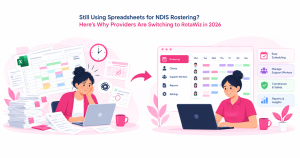
Instead of juggling spreadsheets, manual timesheets, and piles of paperwork, many providers are now using affordable software to handle rostering, billing, compliance, and communication all from one central platform.
For smaller providers, this shift is particularly powerful. Cloud-based tools remove the need for expensive servers or IT support, offering the flexibility to work from anywhere while ensuring data remains secure and accessible.
The result? Fewer admin headaches, less duplication, and more time to focus on participants.
Why Smaller Providers Benefit the Most
While large providers often have teams to handle complex systems, smaller organisations need tools that are simple, affordable, and time-saving. Many struggle with:
- Constantly changing NDIS compliance standards.
- Manual rostering and last-minute shift changes.
- Time-consuming invoicing and claims.
- Limited visibility into team availability and participant needs.
The right technology can solve all of these challenges, not by adding more work, but by simplifying it. Affordable software automates repetitive tasks, streamlines communication, and helps providers deliver consistent, quality care.
Affordable Tech That’s Changing the Game
In 2025, a range of cost-effective tools are empowering small and medium providers to compete head-on with larger organisations. Here’s how they’re making a difference:
Smarter Rostering and Workforce Management
Rostering has always been one of the toughest parts of running an NDIS business. Between cancellations, changing participant needs, and staff availability, managing shifts can take hours every week.
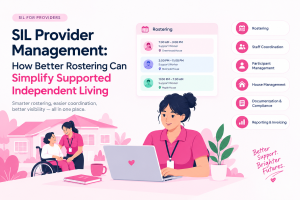
Modern rostering software makes this easier by automating scheduling, sending real-time updates, and allowing carers to clock in and out from their phones. Providers can view the entire team’s availability, assign shifts faster, and instantly communicate updates.
Tools like RotaWiz, for instance, simplify rostering with drag-and-drop scheduling and smart shift management. These features help reduce errors, prevent double bookings, and ensure every shift is matched to the right support worker, all while keeping compliance front and centre.
For smaller providers, this kind of automation saves hours of manual work each week and helps keep rosters accurate and transparent.
Simplified Client and Participant Management
Participant information is the backbone of NDIS support. Every provider needs a system that securely stores client records, plans, progress notes, and incidents, while making them easy to access when needed.
Affordable client management systems make this possible. They centralise data in one place, so staff can find what they need without digging through folders or spreadsheets.
Some platforms also allow linking shift notes directly to participant profiles, improving communication between teams and ensuring consistent care. For smaller organisations, this means less time chasing paperwork and more time delivering meaningful support.
Faster, Error-Free Invoicing and Billing
Billing under the NDIS can be complex. With so many line items, changing price guides, and manual data entry, even one small error can delay payments.
Automated invoicing tools are changing that. They use real-time data from completed shifts to generate invoices instantly, ensuring accuracy and faster turnaround times. Integrations with popular accounting tools like Xero or MYOB further simplify reconciliation and reporting.
With streamlined invoicing built into some rostering platforms, small providers can now manage claims, reduce delays, and maintain a healthy cash flow all without additional admin staff.
Compliance Made Easier
NDIS compliance can be intimidating, but technology is taking much of the stress out of it. Affordable platforms now come with features like incident reporting, digital documentation, and activity logs all designed to keep providers audit-ready.
Instead of scrambling before an audit, providers can maintain real-time records of every shift, note, and communication. This reduces the risk of missing data and builds confidence in compliance reporting.
It’s not about ticking boxes, it’s about building a culture of accuracy and accountability from day one.
Competing on Quality, Not Scale
The biggest advantage of affordable tech for smaller providers isn’t just automation, it’s empowerment.
When admin work runs smoothly, carers can focus on participants. When data is accurate, decision-making improves. When invoicing and rostering are automated, managers can spend more time growing their business instead of chasing paperwork.
Smaller providers often offer more personal, community-based care and with the right technology, they can maintain that close connection while delivering professional, efficient service.
What to Look For in the Right Tech Solution
Not every platform is built the same, and affordability doesn’t always mean value. When choosing the right software, small NDIS providers should consider:
- Ease of use: A tool is only effective if your team can actually use it. Look for clean dashboards and simple navigation.
- Data security: Choose platforms that comply with Australian data protection laws and store information locally.
- Scalability: Make sure the system grows with your business, not against it.
- Transparent pricing: Avoid systems that charge per module or user without clear upfront costs.
Platforms like RotaWiz are built with these principles in mind, easy to adopt, affordable, and tailored for NDIS workflows. It’s about finding a solution that fits your operations today while preparing you for tomorrow’s growth.
Making the Shift, The Right Way
Transitioning from manual to digital systems doesn’t have to be complicated. Here’s a simple approach to get started:
- Identify your bottlenecks where you are losing the most time or making the most errors?
- Research affordable tools that address those pain points directly.
- Trial before you commit most modern platforms offer free demos or trial periods.
- Involve your team and gather feedback from those using the tools daily.
- Start small, scale steadily, migrate one process at a time to avoid disruption.
- Track your results, measure time saved, accuracy, and staff satisfaction.
A smooth implementation not only builds staff confidence but ensures long-term success.
The 2025 Advantage
With new NDIS reforms and rising participant expectations, 2025 is shaping up to be a defining year for disability service providers. The sector is becoming more data-driven, transparent, and competitive.
Affordable tech solutions now give smaller providers access to tools that were once reserved for larger enterprises. The key difference lies in how quickly you adapt. Those who embrace digital solutions early will have the edge on more efficient operations, stronger compliance, and happier participants.
Final Thoughts
Affordable technology isn’t a luxury anymore, it’s a necessity for growth. For small and medium NDIS providers, it’s the key to staying competitive, compliant, and connected in a rapidly evolving care environment.
With tools that automate rostering, streamline billing, and centralise client data, even the smallest providers can now operate with the precision and professionalism of much larger organisations.
The future of disability care in Australia belongs to those who combine compassion with innovation and thanks to affordable tech, that future is now within reach.