Nowadays, the way NDIS services are delivered is under sharper scrutiny than ever before. With the integration of technologies, participants expect consistency, auditors expect accuracy, and regulators expect compliance and records.
For many NDIS providers, the challenge isn’t delivering quality care; it’s proving that care was delivered exactly where, when, and how it was planned. This is where technology is quietly redefining operational standards across the sector.
One capability, in particular, is geofencing.
Once associated mainly with retail and marketing, geofencing has found a far more serious and impactful role inside NDIS technology solutions that helps supporting workforce accountability, service validation, and compliance confidence.
What Geofencing Really Means in the NDIS Context?
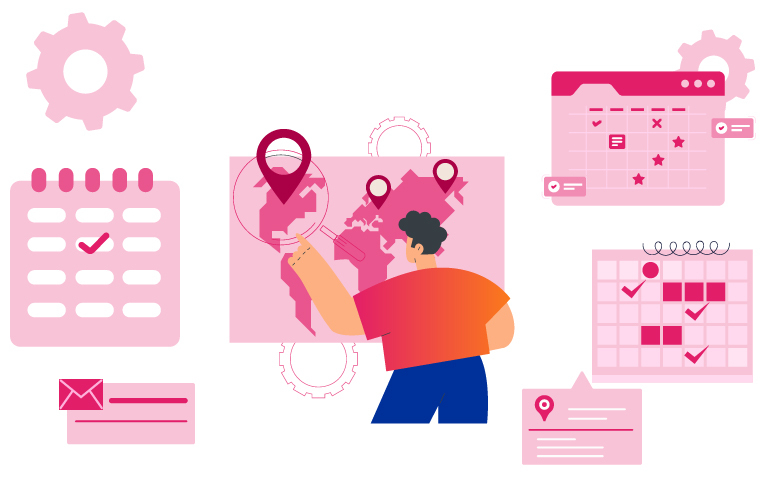
At its core, geofencing is a location-based technology that creates a virtual boundary around a physical place. When a device crosses or enters that boundary, a predefined action is triggered, or processing is enabled, but it has to be in that periphery.
In the NDIS context, this isn’t about marketing notifications or customer engagement. It’s about verification, accountability, and trust.
For NDIS providers, geofencing allows systems to confirm that a support worker has arrived at, stayed within, and exited a participant’s location as scheduled or as recorded by the carer. This adds an additional layer of assurance to service records.
As part of broader NDIS technology solutions, geofencing helps bridge the gap between planned supports and delivered supports.
How Geofencing Works Behind the Scenes?
While the concept sounds simple, the execution is where its real value lies. Modern geofencing integrates seamlessly with mobile devices and cloud-based platforms used by NDIS providers.
Step 1: Defining the Service Boundary
A virtual boundary is set around a participant’s service location using geographic coordinates. This boundary can be precise, flexible, and tailored to the service context.
Step 2: Location Access and Device Signals
Support workers’ devices use GPS, Wi-Fi signals, or mobile networks to share location data securely. This allows NDIS technology solutions to determine proximity without constant manual input.
Step 3: Entry and Exit Detection
When a worker enters or leaves the defined area, the system records the event automatically as well as manually.
Step 4: Triggered Actions
These location events can trigger actions such as enabling clock-in, validating service start times, or flagging anomalies for review.
Step 5: Record Validation
The captured data becomes part of the service record, strengthening the provider’s compliance position through objective verification.
This process transforms geofencing from a technical feature into a functional compliance asset.
Why Geofencing Is Becoming Non-Negotiable for NDIS Providers?
The shift toward geofencing isn’t driven by technology trends alone. It’s driven by risk reduction.
For NDIS providers, even small discrepancies between scheduled and delivered services can lead to serious consequences, such as financial, operational, and reputational consequences. Geofencing reduces these risks by introducing location-based validation into daily operations.
It also supports internal governance. Managers gain clearer visibility into service delivery patterns without micromanaging staff. Trust is reinforced through systems, not surveillance.
This is why geofencing is now embedded within advanced NDIS compliance tools rather than treated as a standalone feature.
Advantages of Having an NDIS Rostering Software with Geofencing
Rostering software without location intelligence solves only half the problem. When geofencing is built directly into rostering workflows, the benefits extend far beyond scheduling efficiency.
A modern NDIS rostering system with geofencing strengthens accountability, protects funding integrity, and improves trust across the care ecosystem. This is why advanced NDIS technology solutions are moving in this direction.
Advantages for Support Providers
For NDIS providers, operational clarity is everything. A rostering system with geofencing introduces structure where ambiguity once existed.
Key advantages include:
- Accurate shift validation: Rosters are automatically validated against real-world location data, reducing disputes around attendance and service times.
- Stronger audit readiness: Location-verified records provide objective evidence during audits, reinforcing confidence in existing NDIS compliance tools.
- Reduced administrative burden: Manual follow-ups, corrections, and explanations decrease significantly when service delivery is validated in real time.
- Better workforce accountability without micromanagement: Providers gain visibility into service delivery without creating friction or mistrust with support staff.
Advantages for Participants
While compliance is critical, participant experience should never be compromised. In fact, geofencing-enabled rostering improves it.
From a participant’s perspective, the benefits are subtle but meaningful:
- Greater reliability of support: Scheduled services are more likely to start on time and at the correct location.
- Improved transparency: Clear service records help build trust between participants, families, and providers.
- Consistent service delivery: When systems enforce structure, participants experience fewer inconsistencies in care delivery.
The Role of Geofencing in Modern NDIS Technology Solutions
The most effective NDIS technology solutions don’t treat geofencing as an add-on. They integrate it into broader workflows that include rostering, service delivery, and reporting.
When done right, geofencing supports:
- Accurate service verification without manual intervention
- Reduced disputes around time, location, and attendance
- Stronger audit trails aligned with NDIS expectations
For growing NDIS providers, this integration is critical. As operations scale, manual oversight becomes unsustainable. Automated location validation ensures consistency even as participant numbers increase.
The Compliance Pressure NDIS Providers Can’t Ignore Anymore
The NDIS landscape has matured and evolved. With that maturity comes higher expectations around transparency, traceability, and governance.
Audits are more detailed. Funding reviews are more precise. And discrepancies, especially around service delivery, are harder to explain away.
Many NDIS providers still rely on manual confirmations, time-based logs, or post-shift documentation to demonstrate service delivery. While these methods may have worked in the past, they are increasingly exposed to risk and irregularities.
This is why modern NDIS compliance tools are evolving beyond documentation alone. They are now expected to validate service delivery in real time, reducing ambiguity and strengthening audit readiness.
How RotaWiz Helps NDIS Providers Turn Geofencing into a Compliance Advantage?
Technology alone doesn’t solve operational challenges. The real value comes from how seamlessly that technology fits into everyday workflows.
That’s where RotaWiz stands apart.
Built specifically for NDIS providers, RotaWiz combines intelligent rostering with built-in geofencing to eliminate guesswork from service delivery. Instead of treating location tracking as an isolated feature, RotaWiz embeds it directly into scheduling, attendance, and service validation.
Support workers can only start or end shifts when they are physically within the approved service location. This simple rule creates a powerful outcome: service records that are automatically aligned with reality.
For providers managing complex rosters, multiple participants, and strict regulatory expectations, RotaWiz functions as more than scheduling software. It becomes one of the most practical NDIS compliance tools in daily operations.
The Competitive Advantage of Proactive Compliance
Compliance is no longer just about avoiding penalties. It’s about differentiation.
Participants, families, and support coordinators increasingly look for providers who demonstrate professionalism, transparency, and reliability. Strong NDIS technology solutions, including geofencing, signal maturity and operational discipline.
For NDIS providers, this translates into:
- Greater trust from stakeholders
- Fewer operational disputes
- More confident scaling decisions
Where Geofencing Delivers the Most Value?
Geofencing proves especially valuable in scenarios where accuracy matters most.
For example:
- In-home supports where location confirmation is essential
- Community-based services with defined service zones
- High-frequency supports require consistent verification
In each case, NDIS compliance tools enhanced with geofencing reduce ambiguity and strengthen service integrity.
This is why forward-looking NDIS providers are embedding geofencing into their core operational stack rather than treating it as a future consideration.
Why RotaWiz Fits Naturally into the Future of NDIS Service Delivery?
The NDIS ecosystem is moving toward evidence-based operations. Paper trails, manual confirmations, and retrospective explanations are being replaced by systems that validate services as they happen.
RotaWiz aligns perfectly with this shift.
By combining rostering and geofencing in a single platform, it helps NDIS providers move from reactive compliance to proactive assurance. Every shift gets verified accurately. Every service record becomes defensible.
In an environment where scrutiny is increasing, RotaWiz supports providers with NDIS compliance tools that work quietly in the background, strengthening governance without slowing teams down.
Conclusion
Geofencing is no longer a future concept for the NDIS sector. It’s a present-day expectation. For NDIS providers, the real value lies in how location intelligence is applied, how it connects to rostering, service delivery, and compliance workflows.
This is where RotaWiz delivers measurable impact.
As one of the emerging NDIS technology solutions purpose-built for real-world care environments, RotaWiz helps providers simplify compliance, protect funding integrity, and scale with confidence.
In 2026 and beyond, the providers who succeed will be the ones using smart systems like RotaWiz to make compliance, accuracy, and transparency a part of everyday operation to deliver high-standard care services.