The NDIS relies heavily on skilled, reliable and compassionate support workers. They play a crucial role in helping participants achieve independence, confidence and meaningful community inclusion. However, many Australian providers are currently facing the same challenge finding and keeping great support workers long-term.
With increasing demand for services and rising workforce competition, building a stable and engaged team is no longer optional, it’s essential for consistent care, compliance and participant satisfaction.
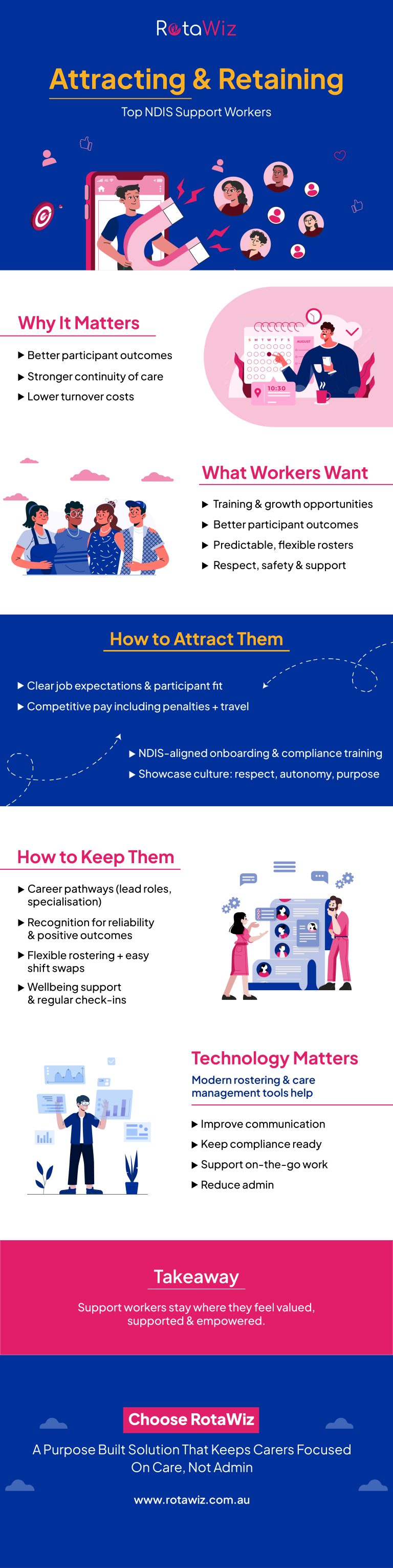
What Makes Support Workers Stay?
Support workers don’t just work for a pay cheque. They choose support work because it’s purposeful and people-centred but they also need structure, clarity and support.
Most NDIS workers stay with a provider when they feel:
- Fairly paid and recognised
- Supported by leadership
- Safe and equipped to work
- Given opportunities for growth
- Able to balance work and life
When these elements are missing, turnover increases and participant outcomes are affected.
Strategies to Attract the Right Talent
Successful NDIS providers take a proactive approach to recruitment. Instead of simply filling shifts, they focus on hiring workers who align with their values, culture and service model.
Key ways to attract strong support workers include:
Clear and Realistic Role Descriptions
Workers appreciate honesty about client needs, expectations and responsibilities, especially when behavioural support or specialised care is involved.
Transparent, Competitive Pay
Fair Award-aligned rates, correct penalties, and clear travel reimbursement build trust and reduce frustrations.
NDIS-Aligned Onboarding
Training in the Code of Conduct, Quality & Safeguards, incident reporting and documentation standards helps new staff feel confident and supported from day one.
Retention: Keeping Good Workers for the Long Term
The real challenge isn’t just hiring, it’s keeping the right people.
Some of the most effective workforce retention practices include:
Predictable and Flexible Rostering
Workers feel valued when shift scheduling works with their life, not against it. Digital rostering tools make this easy and reduce confusion.
Recognition and Feedback
A simple thank you, acknowledgment during team meetings, or celebrating strong participant feedback goes a long way.
Career Pathways and Upskilling
Training in mental health, behaviour management, medication support, or leadership roles gives workers a sense of future, not just a job.
Wellbeing and Safety Initiatives
Support workers face emotional and physical demands. Regular check-ins, peer support and safety-focused culture reduce burnout.
Technology and Workforce Experience
Modern workforce management tools like live rostering, mobile apps, automated timesheets and compliance reminders make everyday tasks easier.
When workers spend less time chasing paperwork and more time supporting participants, job satisfaction naturally increases.
Final Thought
In the NDIS environment, retaining great support workers isn’t just an HR goal, it’s a quality-of-care strategy. When workers feel respected, supported and able to grow, they stay longer and deliver better outcomes.