In the rapidly evolving NDIS landscape, providers face increasing pressure to maintain accuracy across every part of their operations, whether that involves managing participant information, recording shift activity, verifying worker capability, processing invoices, meeting audit expectations or delivering consistent support that aligns with the NDIS Practice Standards. This growing demand for precision creates a complex administrative environment where even small errors can trigger funding delays, audit issues, or service inconsistencies that undermine participant outcomes, yet many organisations continue relying on outdated or manual processes that simply cannot keep pace with modern compliance requirements.
This is why compliance-focused rostering software has become an essential foundation for NDIS providers who want to operate confidently, because the right system not only organises daily schedules but also strengthens governance, improves record reliability, preserves data integrity, supports quality assurance, reduces administrative strain, and creates a single source of truth for every detail related to service delivery. A digital platform built around compliance gives providers the ability to match workers to participants with greater accuracy, maintain verifiable shift evidence, ensure support information is documented correctly, prevent billing discrepancies, track qualifications without last-minute panic, and establish a transparent operational structure that holds up during audits or internal reviews.
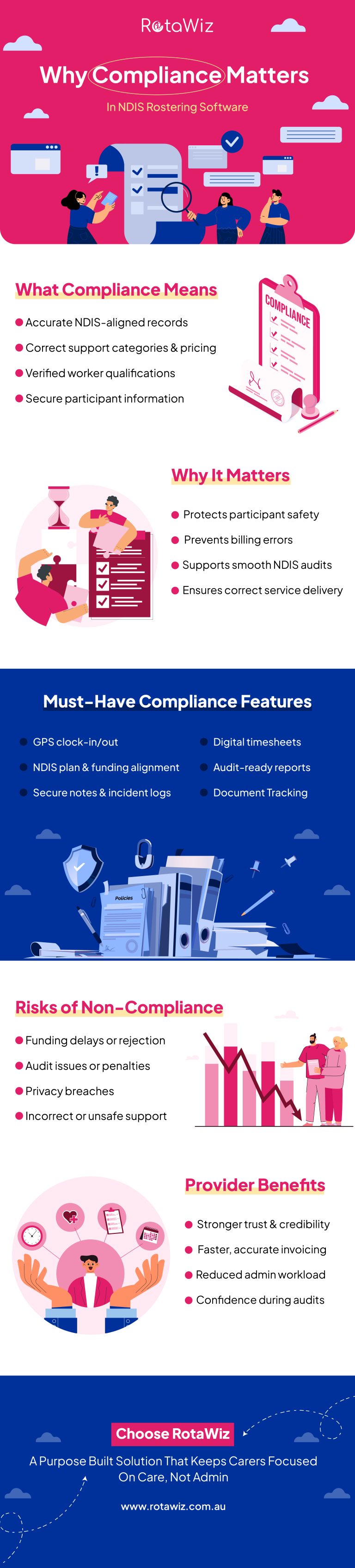
When a provider adopts a system that captures attendance with precision, stores notes securely, aligns support categories correctly, preserves a clear audit trail, and delivers reliable reporting whenever required, the entire organisation becomes more resilient, because administrators no longer struggle to chase paperwork, coordinators avoid guesswork when assigning workers, finance teams process claims with fewer errors, participants experience more consistent support, and quality managers gain far better oversight of service delivery patterns. The result is a more structured operational environment where compliance is maintained naturally through daily workflow rather than forced through reactive processes or rushed documentation.
A strong compliance framework also enhances trust, because participants and families want reassurance that their provider maintains high standards, operates transparently, protects personal information, records every shift with accuracy, verifies worker suitability, and remains fully aligned with NDIS expectations. Rostering software designed with compliance in mind helps demonstrate this commitment, not through marketing claims but through the integrity of the provider’s systems, the reliability of its records, the clarity of its procedures, and the consistency of its service outcomes.
Ultimately, NDIS providers who invest in compliance-ready rostering technology position themselves for long-term stability, because the system supports smoother audits, faster invoicing cycles, stronger workforce coordination, reduced operational risk, more predictable service delivery, healthier organisational culture, and enhanced participant satisfaction. In a sector where trust is earned through accuracy, professionalism and evidence-based practice, choosing the right technology becomes one of the most powerful decisions a provider can make to safeguard their reputation and deliver quality supports every day.